Ireland Immigration Guide for Indians in 2026
Ireland Immigration Guide for Indians in 2026: Work, Study & Business Pathways

Ireland Immigration Guide for Indians in 2026: Work, Study & Business Pathways
Thinking about moving to Ireland in 2026? You are not alone. Ireland has become a popular choice for Indians who want better career opportunities, high-quality education, and a safe, friendly place to live.
With a strong economy, English-speaking environment, and clear immigration rules, Ireland offers several legal, structured pathways to build a long-term life here. This guide breaks down the main options in simple terms so you can decide what fits you best.
Why Do So Many Indians Choose Ireland?
Ireland offers a mix of career growth and quality of life that is hard to find elsewhere:
- Many global tech, finance, and pharma companies have their European headquarters here.
- Universities and colleges are well ranked and recognised around the world.
- Students often get post-study work rights, which can lead to full-time jobs and residency.
- As an EU member state, Ireland also connects you to the wider European market.
For the most accurate and up-to-date information, always double-check official sources like the following:
Work Permits for Indian Professionals
If your main goal is to work in Ireland, there are two key employment permits you should know about.
Critical Skills Employment Permit (CSEP)
The Critical Skills Employment Permit is one of the strongest and fastest routes to long-term residence.
It is designed for high-demand roles in areas like:
- IT and software
- Engineering
- Healthcare
- Finance and other specialist fields
Why this route is attractive:
- Minimum salary starts from €40,904 (2026 threshold).
- No Labour Market Needs Test, which means employers do not need to prove they could not find someone locally.
- You can bring your immediate family more easily.
- You may be eligible for Stamp 4 (permanent residence) after just 21 months.
You can check if your job fits under the eligible roles on the official list on the Department of Enterprise website.
General Employment Permit (GEP)
The General Employment Permit is more flexible and covers a wider range of occupations, including many roles that are not on the critical skills list.
Key points:
- Lower salary threshold: from €36,605 (2026).
- A Labour Market Needs Test is usually required, meaning the job must be advertised locally first.
- The pathway to permanent residence is longer than with CSEP, but still realistic for many applicants.
If your profile does not match the critical skills criteria, the GEP can still be a solid way to start your journey in Ireland.
Student Visa and Post-Study Work Options
For many Indians, studying in Ireland is the first step towards living and working here.
Ireland is especially strong in:
- Computer science and data-related fields
- Business, finance, and management
- Engineering and life sciences
What makes Ireland attractive for students:
- You must study at an ILEP-approved institution (this is important for visa and work rights).
- You can work up to 20 hours per week during term and more during holidays.
- After graduation, many students qualify for Stamp 1G, which offers up to 2 years of post-study work rights.
- During this time, you can look for full-time roles and transition to a work permit such as CSEP or GEP.
Useful official resources:
3. Start-Up Entrepreneur Programme (STEP)
If you are an entrepreneur with a strong, innovative idea, Ireland’s Start-Up Entrepreneur Programme (STEP) can offer a pathway.
This route works best if your business has the potential to:
- Scale quickly
- Create local jobs
- Export internationally
Basic requirements include:
- At least €50,000 in funding.
- A high-potential start-up with a clear plan to grow.
- Strong prospects for revenue, exports, and job creation.
Support from agencies like Enterprise Ireland can strengthen your application and help you refine your pitch and business model.
4. Long-Term Residence and Citizenship
Whichever route you choose—work, study, or entrepreneurship—most legal pathways are ultimately aiming at:
- Stamp 4 (long-term residence / permanent residence)
- Irish citizenship, usually after five years of lawful residence in most standard cases
Citizenship gives you:
- The right to live and work in Ireland indefinitely
- EU citizenship, which brings broader mobility and opportunities across Europe
- A strong sense of long-term security and belonging
Ireland offers Indians clear, legal, and realistic ways to work, study, and build businesses in Europe.
To make the most of these opportunities:
- Start planning early.
- Check that you meet the eligibility criteria for your chosen route.
- Rely on official websites' credible social media pages.
- For complicated situations, consider professional immigration advice.
With the right pathway and preparation, Ireland in 2026 does not have to be just a dream destination.
It can become your long-term home.
Related articles
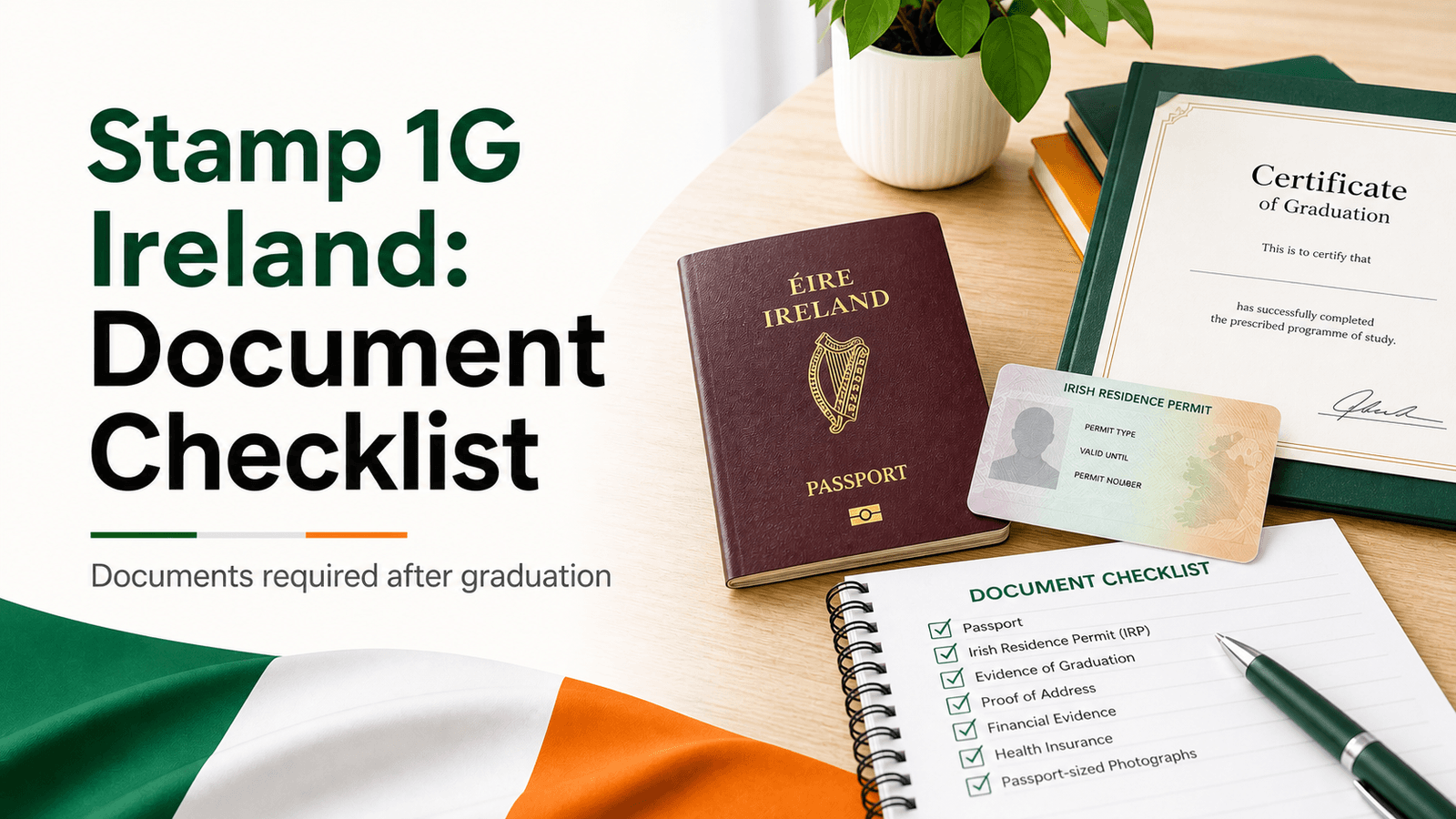
Document Checklist After Graduation
Stamp 1G Ireland: Document Checklist After Graduation

Your complete guide to getting a PPS number in Ireland
Step-by-step instructions for Indian nationals getting their PPS number in Dublin, Cork, and Galway.

How to book your IRP appointment in Dublin
A practical guide to booking and attending your Irish Residence Permit appointment in Dublin as an Indian national.